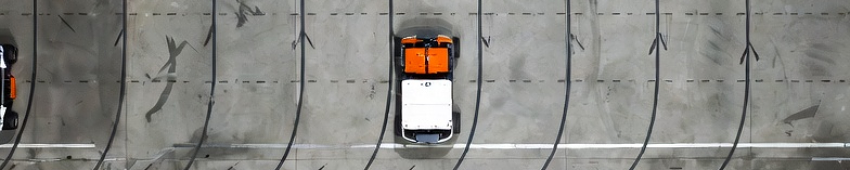


AMRs do not “adjust” to the floor they calculate based on it. Any deviation becomes data error.
Autonomous Mobile Robots (AMRs) rely on predictable physical environments to function reliably. While software, sensors, and fleet management systems receive most of the attention, the concrete floor remains the largest uncontrolled variable in many automated facilities. In environments where AMRs operate continuously, slab flatness is not a cosmetic specification it is a navigation input.
AMRs calculate position, velocity, and trajectory using a combination of LiDAR, wheel odometry, inertial measurement units (IMUs), and vision-based references. These systems assume a consistent rolling surface. When floor elevations fluctuate beyond tolerance, the robot’s perception of distance, pitch, and alignment becomes distorted. Small deviations in flatness accumulate into navigation errors, speed reductions, localization drift, and unexpected safety slowdowns.
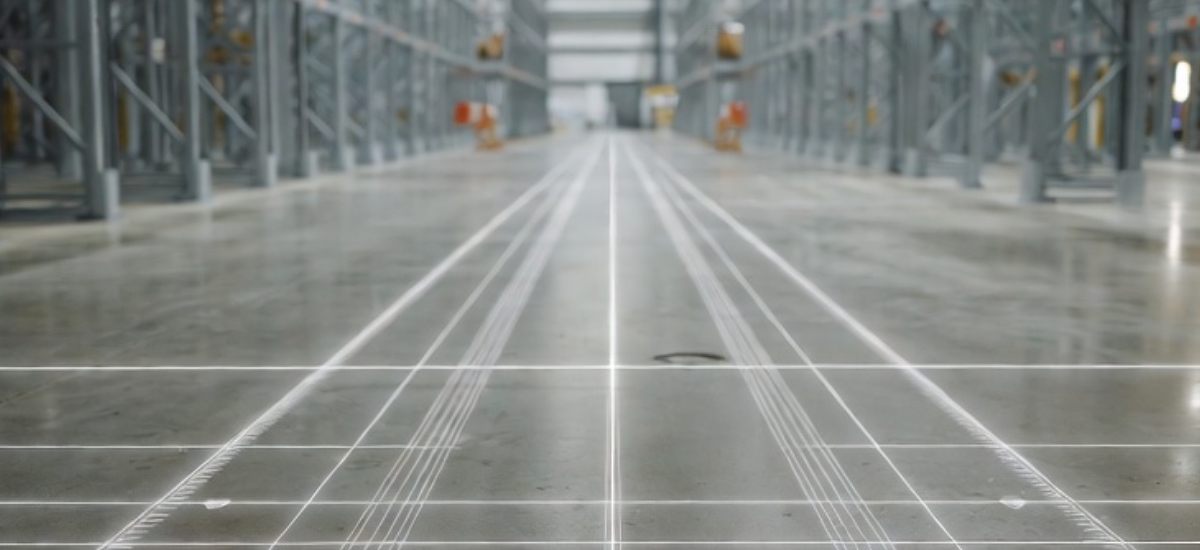
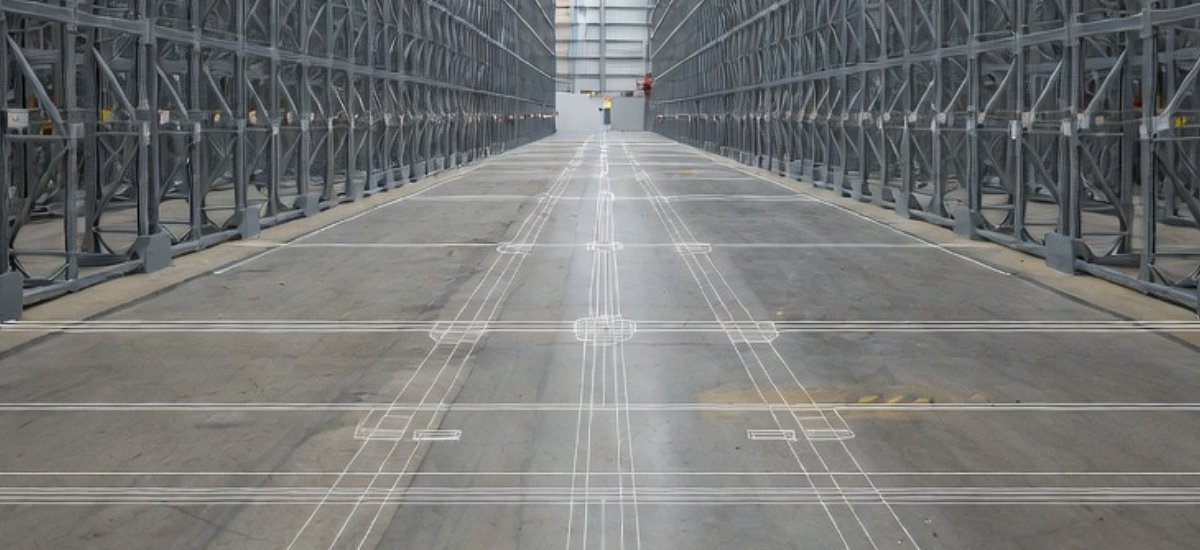
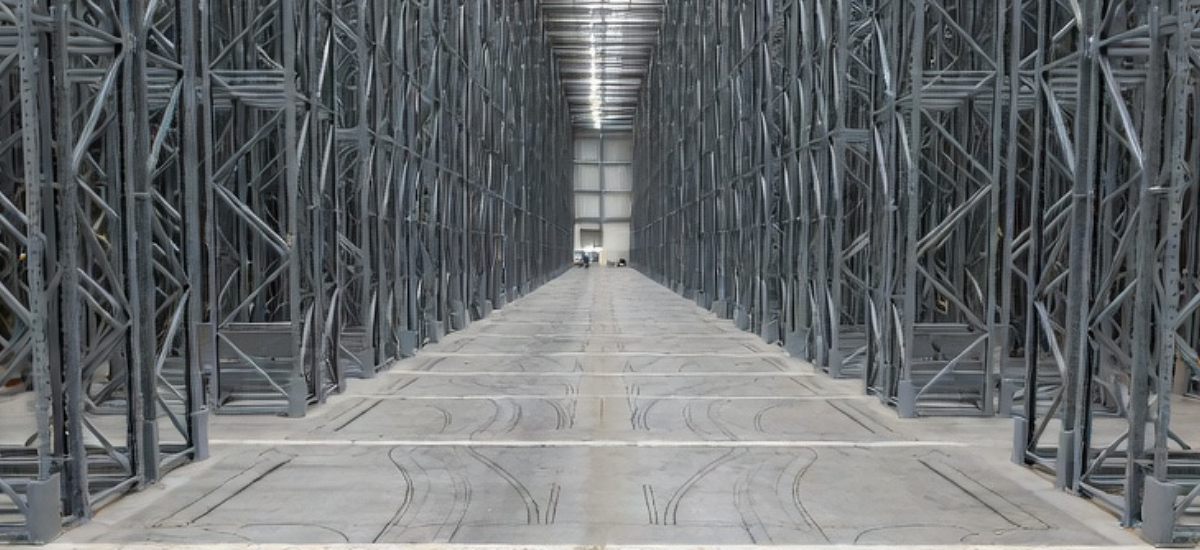
Superflat floors were originally developed to support narrow aisle VNA forklifts, but their relevance has expanded with the rise of robotics. Unlike human-operated equipment, AMRs do not adapt intuitively to surface irregularities. They respond mathematically. A deviation of a few millimeters over short distances can alter wheel contact, sensor calibration, and path accuracy especially in high-density traffic zones, charging areas, and transfer points.
In many automated projects, slab requirements are still defined using conventional commercial or industrial flatness assumptions. These assumptions fail to account for continuous robotic traffic, fixed sensor heights, and repetitive travel paths. The result is a mismatch between automation design intent and floor performance reality.
Understanding how superflat floors influence AMR navigation is essential for facility owners, automation integrators, and engineers responsible for system uptime. Floor flatness directly affects robot speed consistency, localization confidence, maintenance cycles, and long-term operational cost. Treating the slab as passive infrastructure introduces hidden risks that surface only after robots are deployed when corrections are most expensive.
In automated facilities, the floor is not a background condition. It is part of the control system.
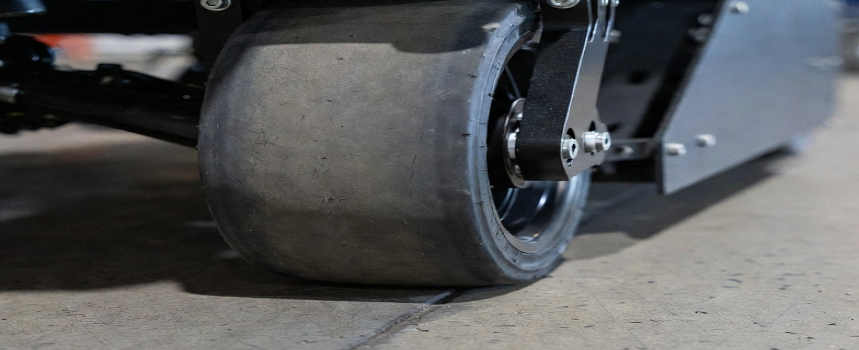
What Defines a Superflat Floor in Robotics Environments
Superflat floors are characterized by extremely tight floor flatness (FF) and floor levelness (FL) tolerances measured over short distances. Unlike standard industrial slabs, these tolerances are designed to minimize elevation change within the robot’s wheelbase and sensor reference zone.
For AMRs, the most critical factor is local flatness, not overall slope. Small, frequent elevation changes introduce oscillation in wheel speed and IMU readings, even when global levelness appears acceptable. Superflat construction prioritizes consistency at the micro-scale where robots operate continuously.
In robotics environments, superflat performance is less about forklift aisle geometry and more about predictable surface behavior across all traffic zones—including staging areas, intersections, and charging stations.
How Floor Flatness Affects AMR Localization Accuracy
AMRs depend heavily on odometry and inertial feedback to validate sensor-based positioning. When the floor introduces vibration, tilt, or uneven wheel loading, odometry calculations drift. This drift forces the system to rely more aggressively on sensor correction, increasing processing load and error recovery events.
Repeated elevation changes can also cause LiDAR reference height variations, subtly altering scan geometry. Over time, this leads to map inconsistencies, slower navigation, and more frequent re-localization events often misattributed to software or network issues.
A superflat slab reduces mechanical noise, stabilizing the robot’s physical reference frame and improving localization confidence across long operational cycles.
Impact on Speed, Throughput, and Traffic Efficiency
Just like other pseudo-elements and pseudo-class selectors, :not() can be chained with other pseudon classes and pseudo-elements. For example, the following will add a “New!” word to list items that do not have a .old class name, using the ::after pseudo-element:
Impact on Speed, Throughput, and Traffic Efficiency
Many AMR fleets dynamically adjust speed based on vibration thresholds and perceived instability. Floors that fail to meet superflat expectations trigger automatic slow zones, even when no obstacles are present.
This behavior compounds in multi robot environments. Slower speeds increase congestion, queue formation, and idle time at transfer points. What appears to be a minor floor deviation becomes a systemic throughput constraint.
Superflat floors enable consistent travel speeds, smoother acceleration profiles, and predictable braking directly supporting higher utilization rates and more stable traffic algorithms.
Long-Term Wear, Maintenance, and Calibration Drift
Uneven slabs accelerate mechanical wear on wheels, bearings, and suspension components. For AMRs, this wear alters wheel diameter and traction characteristics, further degrading odometry accuracy over time.
Frequent recalibration, wheel replacement, and sensor adjustment are often symptoms of floor-induced stress rather than equipment defects. Facilities without superflat slabs experience shorter maintenance cycles and higher lifecycle costs, even when robots themselves are properly specified.
A stable, flat slab extends component life and preserves calibration integrity.
Best Practices for Superflat Floors Supporting AMRs
Effective robotics floors begin with automation-informed flatness criteria, not generic slab specs. FF/FL targets should be defined based on robot type, wheelbase, speed, and sensor configuration.
Testing must be performed using appropriate methods and documented before robot commissioning. Flatness should be verified across all operational zones, not selectively.
Most importantly, the floor must be treated as a performance system that directly supports robotic navigation—not as a finished surface applied after automation decisions are made.